Practical Home Improvement Ideas for Every Room
Home improvement is most rewarding when it answers real needs rather than chasing whatever is fashionable for a season. A better kitchen layout can save minutes every morning, improved insulation can trim utility bills, and smarter storage can make crowded rooms feel easier to live in. This guide explores practical upgrades for every room, with a focus on cost, durability, comfort, and day-to-day usefulness. The goal is simple: help homeowners and renters make informed changes that add value without adding chaos.
Outline
- How to plan projects, set priorities, and build a realistic budget
- Kitchen improvements that raise efficiency, storage, and visual appeal
- Bathroom upgrades focused on moisture control, safety, and water savings
- Living room and bedroom ideas that improve comfort, lighting, and organization
- Entry, laundry, and whole-home changes that support efficiency and long-term value
1. Start With a Plan: Budget, Priorities, and Smart Sequencing
The most successful home improvement projects begin long before anyone opens a paint can or carries in a new light fixture. Planning is not glamorous, but it is the stage that protects your money and your patience. Many homeowners overspend because they start with products instead of problems. A wiser approach is to walk through your home with a notebook and ask a few plain questions: What frustrates you every week? What looks worn because it is truly aging, and what only feels dated because the finish is old? Which repairs affect safety, energy use, or moisture control? When you work from those answers, the project becomes practical instead of impulsive.
Budgeting should follow the same logic. Separate spending into categories such as repairs, functional upgrades, finish materials, and labor. That breakdown quickly shows whether your money is going toward essentials or mostly toward appearance. It is also smart to reserve a contingency fund. Contractors and remodelers often suggest setting aside 10 to 20 percent for surprises, especially in older homes where walls, wiring, or plumbing can reveal problems after demolition begins. Even smaller projects benefit from this habit. A simple floor replacement may require extra underlayment, trim, or subfloor repair once the old material comes up.
Sequencing matters just as much as the budget. If you paint before rewiring, or install flooring before fixing a leak, you risk doing the same job twice. A useful order is to handle structural issues first, then mechanical systems, then surfaces and decor. In plain language, think of it as bones, muscles, and clothing. The house needs its bones strong before it gets dressed up.
- Prioritize health and safety items first, including leaks, mold, electrical problems, and poor ventilation.
- Bundle messy work together so dust-producing tasks happen before painting or finishing.
- Measure carefully and order materials with a little extra, especially tile and flooring, where 5 to 15 percent overage is common.
- Check permit requirements for electrical, plumbing, structural, and exterior changes.
There is also a quiet power in choosing projects that match your season of life. A family with young children may care more about washable finishes and storage than luxury stone. Someone working from home may gain more value from sound control and better task lighting than from decorative upgrades. Home improvement works best when the house begins to support the people inside it, not the other way around. That is the foundation for every room that follows.
2. Kitchen Improvements That Improve Workflow and Everyday Use
The kitchen is often called the heart of the home, but on busy weekdays it behaves more like a train station. People pass through it constantly, appliances compete for space, and clutter gathers with impressive speed. That is why kitchen improvement should focus first on workflow. Before replacing anything expensive, observe how the room functions. Do cabinet doors collide? Is the trash bin far from the prep area? Are your most-used pans stored across the room from the stove? Good design is not abstract in a kitchen; it is measured in steps, reach, light, and clean surfaces.
One of the most effective upgrades is improving storage at the point of use. Deep drawers for pots, pull-out trays for pantry items, vertical dividers for baking sheets, and drawer organizers for utensils all make daily tasks easier. These are not flashy improvements, yet they can transform the room more than a trendy backsplash. Open shelving can look airy, but it asks for discipline and frequent dusting. Closed cabinetry usually works better for households that prefer a calmer visual field.
Lighting is another area where practical improvement pays off quickly. A single ceiling fixture often leaves prep counters in shadow. Layered lighting works better: ambient light for the room, task lighting under cabinets, and focused pendants or fixtures over islands or eating areas. LED bulbs are especially useful here because, according to U.S. energy guidance, they use far less electricity than incandescent bulbs and typically last much longer. Better light improves cooking accuracy, safety with knives, and even the way wall colors and countertops appear.
- Replace dated cabinet hardware for a low-cost visual refresh.
- Use under-cabinet LED strips to brighten work zones.
- Add a pull-out trash and recycling cabinet to reduce visual clutter.
- Choose durable finishes such as quartz, quality laminate, or sealed butcher block based on maintenance preference.
Appliances deserve a measured comparison rather than a rush toward features. A large professional-style range may look impressive, but if your cooking style is simple, the money may be better spent on ventilation, a quieter dishwasher, or a refrigerator layout that actually fits your groceries. ENERGY STAR certified appliances can reduce energy and water use in many households, though savings vary by model and use habits. Ventilation is often overlooked, yet a properly vented range hood helps remove grease, heat, and cooking odors, which matters in both small apartments and open-plan homes.
If a full remodel is not realistic, cosmetic improvements still go a long way. Painting cabinets, updating the faucet, replacing a worn sink, and installing a washable backsplash can give the kitchen a cleaner and more intentional look. The room does not need to look like a showroom. It needs to support breakfast on rushed mornings, quiet cups of tea, late-night leftovers, and all the ordinary moments that make a house feel lived in.
3. Bathroom Upgrades for Durability, Comfort, and Water Efficiency
Bathrooms are small rooms with large demands. They deal with moisture, frequent cleaning, changing temperatures, and heavy daily use, often in a limited footprint. That combination means bathroom improvement should begin with durability rather than decoration. A beautiful vanity means little if poor ventilation allows condensation to linger on walls and ceilings. Likewise, a stylish tile floor will not feel like a success if the room lacks storage or the shower is hard to clean. In a bathroom, practical choices usually age better than dramatic ones.
Ventilation is one of the highest-value upgrades in this space. A properly sized exhaust fan helps reduce humidity, which in turn lowers the chance of mold growth, peeling paint, and warped materials. Many building professionals recommend fans vented to the exterior, not into an attic or wall cavity. If your bathroom mirror fogs for a long time after a shower, that is often a sign that moisture control needs attention. Pairing better ventilation with mildew-resistant paint and well-sealed wet areas creates a room that stays sound beneath the surface, not just neat on the day it is finished.
Water-saving fixtures are another sensible investment. Older toilets and showerheads can use substantially more water than modern high-efficiency models. Today, many low-flow showerheads maintain satisfying pressure while reducing water use, and WaterSense-labeled fixtures are designed to meet performance standards while using less water. For households watching utility bills, these changes can add up gradually without sacrificing comfort. Faucets with aerators, dual-flush toilets, and thermostatic shower valves also improve day-to-day usability.
- Use porcelain tile or quality waterproof flooring in splash-prone areas.
- Choose vanities with drawers instead of only cabinet doors for better organization.
- Install recessed niches in showers to reduce clutter on ledges and corners.
- Consider grab bars or reinforced walls for future accessibility, even if you do not need them yet.
Storage and cleaning should influence material selection. Matte black fixtures can look sharp but may show water spots and soap residue more clearly in some homes. Large-format tile can reduce grout lines, which means less scrubbing. Floating vanities create a lighter visual effect and make floor cleaning easier, while freestanding models sometimes provide more enclosed storage. Mirrors with built-in lighting can help with shaving, makeup, and general grooming, especially where overhead light casts shadows.
There is also a strong argument for making bathrooms safer without making them look clinical. Slip-resistant flooring, rounded countertop corners, comfort-height toilets, and handheld showerheads are small choices that improve use for children, guests, and aging family members alike. In many homes, the best bathroom renovation is not the one that feels luxurious for a week. It is the one that remains easy to use, easy to clean, and resistant to wear for many years.
4. Living Rooms, Bedrooms, and Storage Areas That Feel Better to Live In
If the kitchen is the engine of the house, living rooms and bedrooms are where the emotional temperature is set. These are the spaces where people try to rest, gather, read, watch, work, and occasionally hide from one another for ten quiet minutes. Improving them often has less to do with major construction and more to do with comfort, lighting, acoustics, and storage. The right change can make a room feel larger, calmer, and more useful without moving a single wall.
Paint remains one of the most cost-effective tools in home improvement, but its real power comes from choosing color with the room’s conditions in mind. Rooms with limited natural light often benefit from warm off-whites or soft neutral tones rather than stark bright white, which can appear flat or cold. In bedrooms, slightly muted colors tend to create a steadier mood than highly saturated shades. Finish matters too. Washable eggshell or satin often works well in active family spaces, while flatter finishes can soften wall imperfections in quieter rooms.
Lighting should be layered rather than singular. A living room lit only by a ceiling fixture can feel harsh, like a waiting area after closing time. Combine ambient lighting with lamps, wall sconces, or reading lights to create zones for conversation, relaxation, or focused tasks. Bedrooms benefit from bedside lighting that is easy to reach, blackout window treatments for sleep quality, and dimmers where possible. Good lighting design is not about making everything brighter. It is about putting brightness where it belongs.
Storage is where many shared rooms either thrive or surrender. Built-in shelving, storage benches, media units with closed doors, and under-bed containers help contain the everyday tide of books, toys, chargers, blankets, and paperwork. Hallways and awkward corners can often hold tall shelving or shallow cabinets. A narrow console in an entry or landing zone can catch keys and mail before they spread like confetti through the house.
- Use mirrors strategically to reflect daylight, but avoid placing them where glare becomes annoying.
- Add area rugs and curtains to soften sound in echo-prone rooms.
- Seal gaps around windows and doors to reduce drafts and improve comfort.
- Choose furniture scaled to the room so circulation paths remain clear.
Comfort also depends on what you do not immediately see. Drafts, poor insulation, and noise transfer can make attractive rooms feel strangely restless. Weatherstripping, caulking, thicker curtains, and even a solid-core interior door for a home office or bedroom can improve privacy and thermal comfort. A room should not merely photograph well. It should support a nap, a movie night, a phone call, a winter morning, and the ordinary messiness of real life. That is when improvement becomes meaningful rather than cosmetic.
5. Entryways, Laundry Spaces, and Whole-Home Efficiency Upgrades
Some of the most useful home improvements happen in spaces that rarely appear in design magazines. Entryways, laundry rooms, utility areas, and circulation zones are the backstage crew of the house. When they function well, the entire home feels easier to manage. When they do not, shoes pile up, coats migrate to dining chairs, cleaning supplies vanish when needed, and laundry becomes a low-level source of annoyance. Improving these areas is less glamorous than replacing countertops, but the daily payoff can be remarkable.
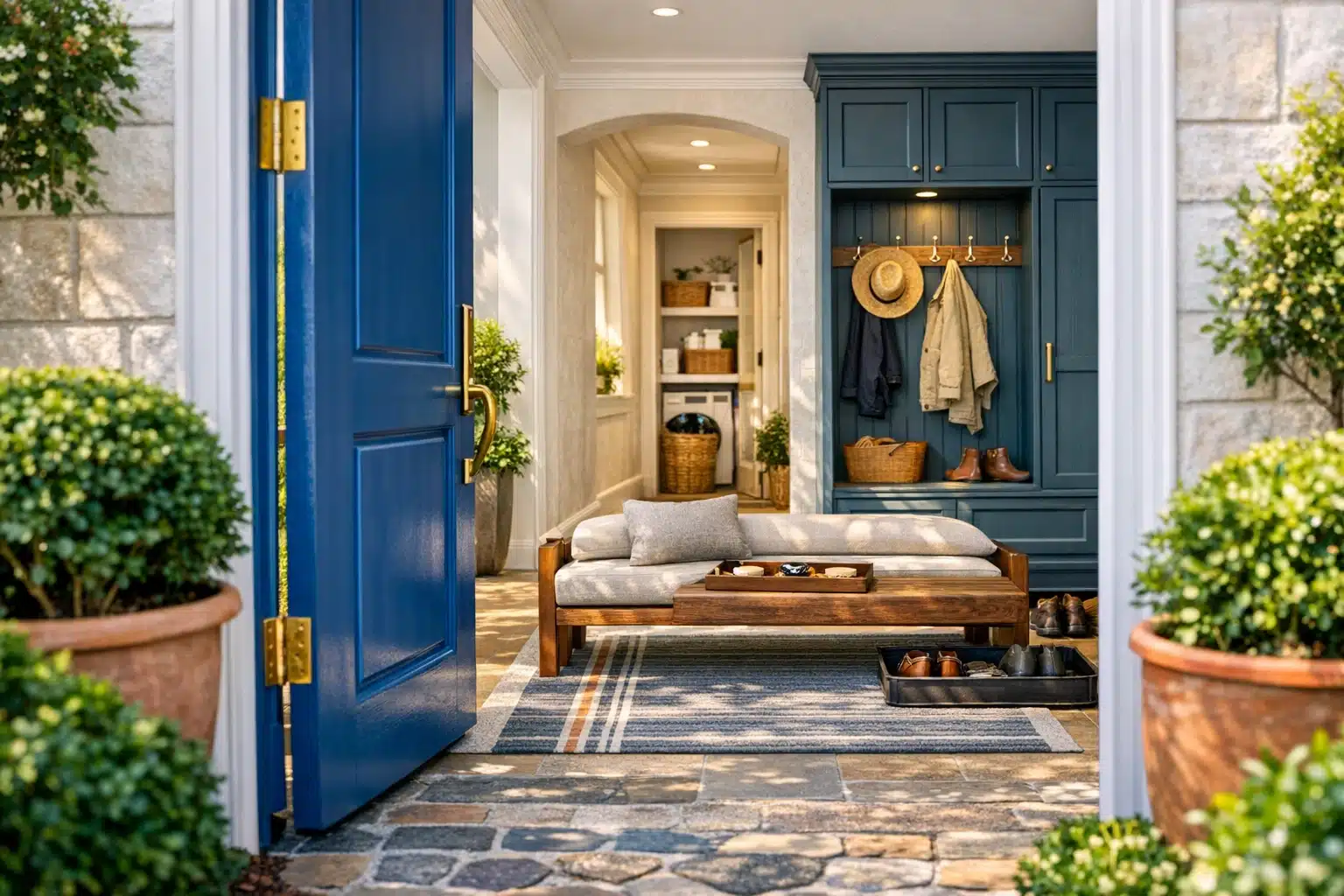
Start with the entryway, even if it is only a sliver of wall near the front door. This is your home’s landing strip. A bench, a few sturdy hooks, a tray for keys, and closed storage for shoes can reduce clutter immediately. In wetter climates, a washable rug and a boot tray protect floors from moisture and grit. If space allows, a narrow cabinet for bags, umbrellas, and pet supplies can turn a chaotic threshold into a useful transition zone. The goal is to give incoming items a home before they drift elsewhere.
Laundry areas also benefit from modest but thoughtful upgrades. Front-loading machines may allow countertop space above or nearby for folding, while wall shelves or upper cabinets create room for detergents and linens. Good lighting helps with stain treatment and sorting. A floor drain or leak detector can be a smart safeguard in homes where washer overflows would be especially disruptive. Venting the dryer properly and cleaning the duct regularly matters for both efficiency and safety. If the room is noisy, adding anti-vibration pads or improving the door seal can make nearby spaces more pleasant.
Beyond individual rooms, whole-home efficiency should be part of any improvement plan. Sealing air leaks around attic hatches, doors, plumbing penetrations, and windows can meaningfully reduce heating and cooling loss. In many homes, better insulation and air sealing produce more noticeable comfort gains than purely decorative upgrades. Smart thermostats can help some households manage schedules more efficiently, though the best results still depend on consistent habits and a properly maintained HVAC system. Clean filters, serviced equipment, and balanced airflow remain fundamental.
- Upgrade weatherstripping around exterior doors to reduce drafts.
- Use LED lighting in utility spaces for long life and low maintenance.
- Check gutters and downspouts so water moves away from the foundation.
- Refresh exterior caulk and paint where needed to protect siding and trim.
Finally, do not underestimate curb appeal. A well-painted front door, clear house numbers, trimmed landscaping, and functional outdoor lighting improve first impressions and navigation. These changes are not just cosmetic. They can support safety, visibility, and upkeep. Home improvement at its best is not a string of isolated purchases. It is a set of choices that helps the house perform better from the front step to the back wall.
Conclusion: Practical Changes Create Lasting Value
For most readers, the smartest home improvement strategy is not to renovate everything at once, but to improve the places that shape daily routines first. Focus on rooms that affect comfort, storage, energy use, and maintenance, and let style follow function instead of replacing it. A better vent fan, a clearer kitchen workflow, stronger entry storage, or fewer drafts may not sound dramatic, yet these are the upgrades people appreciate month after month. If you plan carefully, compare materials honestly, and choose improvements that match the way you live, your home can become easier to maintain, more pleasant to use, and more resilient over time.