Comprehensive Guide to Residential Swimming Pool Installation
Installing a residential swimming pool is part construction project, part design exercise, and part long-term maintenance commitment. A well-planned pool can improve daily enjoyment, support exercise, and reshape how a backyard functions through every season. The challenge is that early choices about layout, materials, and equipment echo for years in cost, comfort, and upkeep. This guide maps the process from concept to care so homeowners can make practical decisions with clear expectations.
Before diving into the details, it helps to see the roadmap. This article begins with planning and site evaluation, then moves into design choices, explains the construction sequence, breaks down maintenance systems, and closes with cost, safety, and homeowner-focused guidance.
- Planning the site, budget, and approvals
- Designing for appearance, movement, and everyday use
- Understanding the build process from excavation to start-up
- Managing equipment, water quality, and seasonal care
- Balancing cost, safety, and long-term value
Planning the Project: Site Conditions, Goals, and Early Decisions
The earliest stage of a pool project is rarely the most glamorous, but it is the one that shapes everything else. Before a shovel touches the ground, homeowners need to define what the pool is meant to do. Is it for family recreation, lap swimming, entertaining, low-impact exercise, or simply creating a stronger visual center in the yard? A compact plunge pool, for example, may suit a narrow urban lot and still provide relief during hot weather. A longer rectangular basin may be better for exercise and formal landscaping. When the intended use is clear, design and construction choices become easier to evaluate.
Site conditions matter just as much as personal preference. A backyard that looks generous on paper can become surprisingly tight when setbacks, easements, retaining walls, septic systems, utility lines, and drainage paths are mapped. Soil type affects excavation and structural requirements. Clay-heavy ground can expand and contract with moisture, while rocky sites can increase labor time and equipment costs. Sloped lots may require engineered retaining solutions or creative deck elevations. Access is another practical issue that often arrives like an uninvited guest: if machinery cannot enter through a side yard, construction methods may need to change.
At this stage, an outline of key considerations helps keep the project grounded:
- Local permits, zoning, and barrier requirements
- Utility location and underground obstacles
- Sun exposure, wind direction, and privacy needs
- Space for equipment pads and service access
- Realistic allowances for decking, fencing, and drainage
Budget planning should also begin with full-project thinking, not shell-only pricing. Homeowners are often surprised that decking, fencing, electrical upgrades, landscaping repairs, and water features can substantially change the final number. Even furniture, storage, and shade structures influence how complete the finished area feels. In practical terms, the pool is not just a vessel for water; it is an outdoor environment with legal, structural, and comfort requirements. The most successful projects begin with patience, accurate measurements, and a willingness to ask blunt questions early. That may not feel as exciting as choosing tile, but it is what keeps a beautiful plan from becoming a frustrating one.
Designing a Residential Pool: Shape, Materials, and How the Space Will Feel
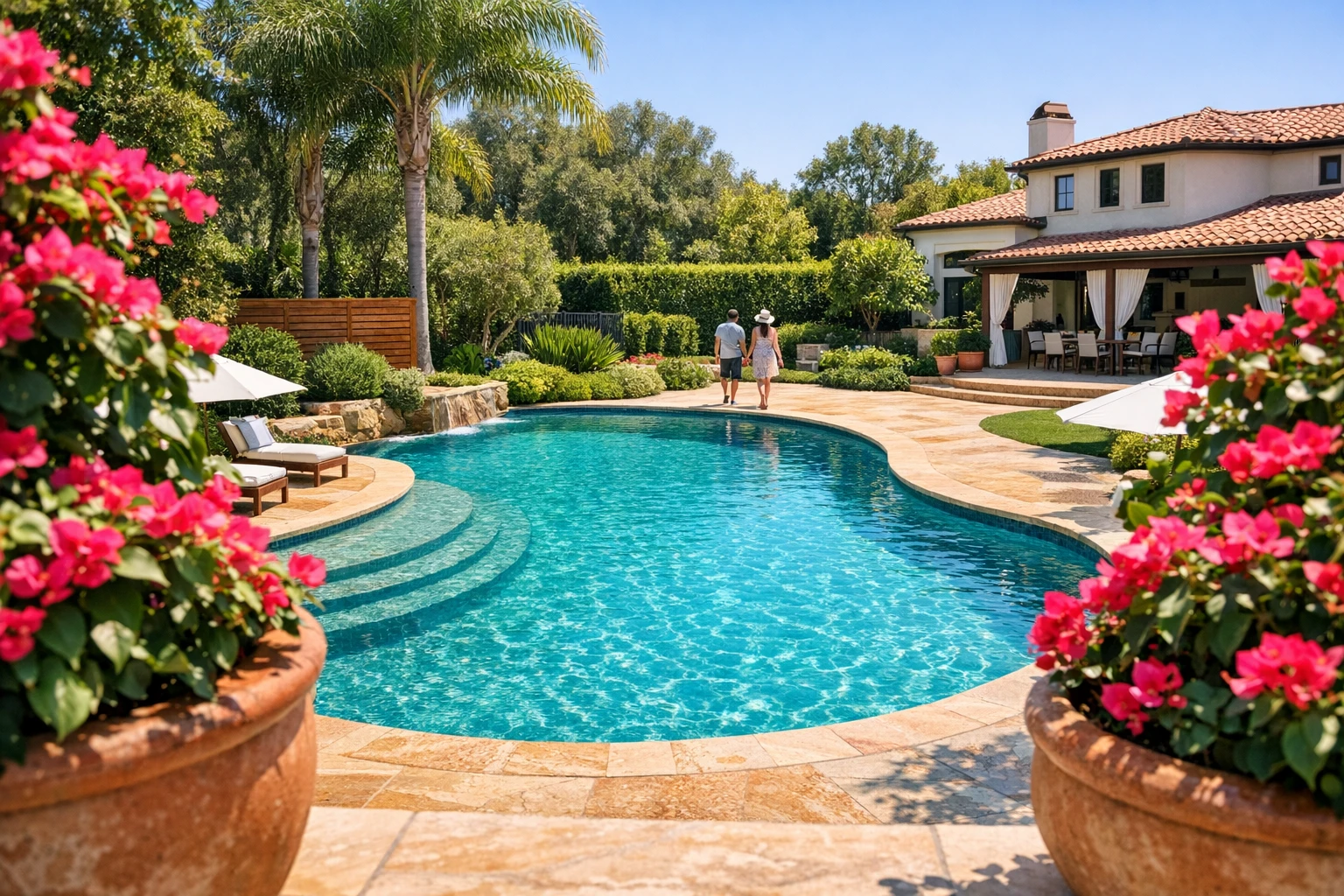
Pool design is where function and atmosphere finally shake hands. A well-designed pool should look as if it belongs to the house, the lot, and the people who will use it most. This is why the best designs are not merely copied from trend boards. A geometric pool with crisp edges may complement a modern home, reinforce strong lines, and make automatic covers easier to integrate. A freeform pool, by contrast, can soften a landscape, blend with gardens, and create a more relaxed visual rhythm. Neither approach is universally better; each works when it matches the architecture and the lifestyle of the household.
Size and depth deserve more discussion than they usually receive. Bigger is not always better. Oversized pools cost more to excavate, finish, heat, clean, and renovate later. Many families discover that a thoughtfully designed shallow lounging area, broad entry steps, and clear sightlines matter more in daily life than a dramatic deep end. Lap swimmers may prioritize uninterrupted length, while households with young children often prefer larger standing zones and gentle entry points. Even the placement of benches and ledges affects how people gather. In a good design, the pool begins to anticipate behavior.
Material selection also shapes both appearance and construction. Three common in-ground options are often compared:
- Concrete or gunite pools offer the highest level of customization in shape, size, and integrated features.
- Fiberglass pools arrive as preformed shells, usually install faster, and have smooth interior surfaces.
- Vinyl liner pools can be cost-effective and flexible in layout, though liners require replacement over time.
Each material comes with trade-offs. Concrete can support highly customized spas, beach entries, and perimeter-overflow details, but it generally has the longest build time and may require more surface care over its lifespan. Fiberglass is attractive for homeowners who want predictable installation and a slick, less porous finish, though available shapes are limited to manufactured molds. Vinyl can deliver visual appeal at a lower entry price, yet puncture risk and liner replacement are long-term considerations.
Design is also about everything around the water. Decking materials influence heat retention, slip resistance, and maintenance. Planting design affects debris levels and privacy. Lighting changes how the space feels after sunset and improves visibility. Good design rarely shouts. It guides movement, manages comfort, and makes the pool feel natural on an ordinary Tuesday, not just during a summer party. That quiet success is the mark of a design that will still feel right years later.
Construction Explained: From Layout and Excavation to Equipment and Start-Up
Once design documents, permits, and engineering are in place, construction begins to translate drawings into something physical and surprisingly dramatic. One week there is a lawn, and the next there is a carved-out void that suddenly makes the project feel real. The process varies by pool type, contractor workflow, weather, and local inspection requirements, but most residential builds follow a recognizable sequence. Understanding that sequence helps homeowners track progress and avoid panic when the yard temporarily looks like a controlled disaster.
The first major step is layout. The builder marks the pool outline, deck edges, utility runs, and equipment location. This is the moment to verify dimensions, step placement, and spacing around the pool before excavation locks the footprint into the site. After layout comes excavation, which is often fast but not always simple. Rock, groundwater, unstable soil, and access limitations can slow work and add cost. In sloped yards, excavation may be paired with retaining walls or additional structural support.
From there, the build path diverges slightly by pool type:
- Concrete pools typically move from excavation to steel reinforcement, plumbing rough-in, electrical bonding, shell application, curing, coping, tile, decking, interior finish, and start-up.
- Fiberglass pools generally involve excavation, base preparation, shell placement, plumbing and electrical work, controlled backfill, coping or deck installation, and start-up.
- Vinyl liner pools usually include wall panel installation, floor preparation, plumbing and electrical rough-in, liner fitting, deck work, filling, and system start-up.
Timeline differences are meaningful. Fiberglass projects often move more quickly because the shell arrives manufactured, while custom concrete builds typically take longer due to structural forming, curing periods, finish work, and weather sensitivity. That said, speed is not the only measure of success. Precision matters more than momentum. Poor grading can leave drainage issues. Inadequate plumbing layout can affect circulation. Sloppy deck planning can create uncomfortable traffic patterns or puddling around the perimeter.
One of the most overlooked construction phases is start-up. This is when pumps, filters, heaters, automation, lighting, and sanitation systems are tested and balanced. A pool is not truly finished when it is filled with water; it is finished when the systems operate correctly, the chemistry is stabilized, and the owner understands how to run it. In a sense, construction ends not with a splash, but with calibration. That final stage turns a built structure into a functioning backyard system.
Maintenance and Equipment: Keeping Water Clear, Surfaces Protected, and Costs Under Control
Maintenance is where pool ownership becomes real. Sparkling water does not happen by accident, and no equipment package completely removes the need for routine attention. The good news is that maintenance becomes far less intimidating when owners understand the purpose behind each task. A pool is a closed water system that depends on circulation, filtration, sanitation, and balanced chemistry. When one of those elements falls out of line, the symptoms show up quickly through cloudy water, staining, scale, algae, or excessive chemical demand.
Equipment choices influence how much effort maintenance requires. Variable-speed pumps are widely favored because they can reduce energy use compared with older single-speed models while improving circulation flexibility. Filtration usually relies on sand, cartridge, or diatomaceous earth systems. Sand filters are durable and simple, cartridge filters avoid backwashing and can offer fine filtration, and DE filters are known for high clarity but involve more hands-on maintenance. Heating options include gas heaters for faster temperature rise and heat pumps for more efficient operation in suitable climates. Covers can reduce evaporation, heat loss, and debris, making them valuable even though they add initial cost.
Sanitation deserves a clear explanation because marketing terms can confuse buyers. Saltwater pools are not chlorine-free pools; they use a salt chlorine generator to produce chlorine in the water. Traditional chlorine systems, salt systems, and some supplemental UV or ozone setups can all work well when properly installed and maintained. The best choice depends on local climate, bather load, owner preference, and service habits rather than trend alone.
A practical care routine usually includes the following:
- Skim debris and check circulation regularly
- Test sanitizer, pH, and alkalinity on a consistent schedule
- Brush walls, steps, and corners to prevent buildup
- Empty baskets and clean filters as needed
- Monitor water level, especially in hot or windy periods
- Adjust seasonal care for opening, closing, or year-round use
Surface material also affects maintenance style. Concrete interiors may need more brushing and periodic resurfacing over the years. Fiberglass surfaces tend to be smooth and easier to clean, though water balance still matters to protect finishes and equipment. Vinyl liners require care around sharp tools, pets, and vacuum heads to avoid damage. In every case, neglect is more expensive than consistency. A pool rewards regular small efforts and punishes long stretches of wishful thinking. Once owners accept that rhythm, maintenance becomes less of a burden and more of a manageable household routine.
Costs, Safety, and Final Guidance for Homeowners
The financial side of pool ownership extends far beyond installation day. Upfront costs typically include design work, permits, excavation, structural work, plumbing, electrical service, interior finish, decking, and code-required barriers. Then come the quieter but recurring expenses: electricity, water, chemicals, seasonal service, repairs, cleaning tools, heater operation, and eventual renovation. That does not mean a pool is a poor investment in lifestyle terms. It simply means that a realistic owner should judge the project by both enjoyment and operating responsibility. A beautiful pool that strains the household budget can quickly lose its appeal.
Safety deserves equal weight, especially in residential settings where daily familiarity can lead to carelessness. Pool barriers, self-closing gates, alarms where required, slip-resistant surfaces, adequate lighting, and visible depth transitions all reduce risk. Homeowners should also ask contractors about compliant drain covers, bonding, electrical protection, and local code obligations rather than assuming every feature is automatic. A safe pool is not defined by one product; it is created by layers of prevention. The strongest safety habits are often the least dramatic: secure access, active supervision, clear rules, and regular equipment checks.
When evaluating long-term value, homeowners should think in three lanes at once:
- Daily use value: exercise, recreation, family gathering, and visual enjoyment
- Operational value: manageable maintenance, efficient equipment, and durable materials
- Property value context: neighborhood expectations, climate, and buyer preferences
A pool may increase appeal in some markets and matter less in others, so it should not be justified only as a resale strategy. Its strongest value is usually personal use. If the design fits the property, the construction is executed carefully, and the maintenance plan is realistic, a pool can become one of the most satisfying parts of a home. Summer evenings feel longer. Ordinary weekends become easier to enjoy without travel. The yard starts doing more than sitting there.
For homeowners deciding whether to move forward, the clearest advice is simple: choose a pool you can comfortably build, confidently maintain, and genuinely use. Do not let style outrun function, and do not let short-term savings weaken the structure or equipment. Ask detailed questions, compare materials honestly, and think past the first season. The best residential pool is not the most extravagant one on paper. It is the one that still feels smart, safe, and welcoming long after the excitement of installation has passed.